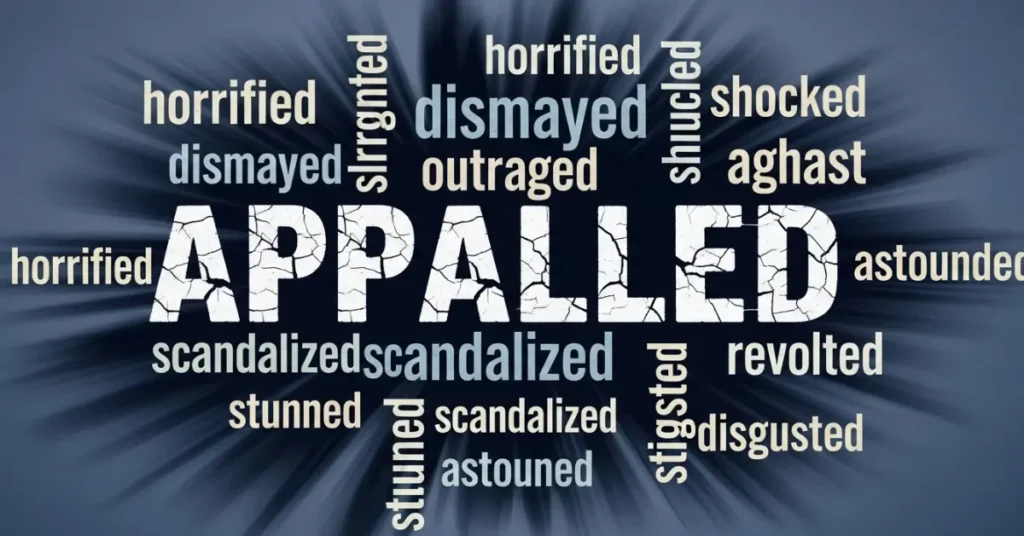
Sometimes we see or hear something so surprising and bad that it makes us feel upset and shocked. Maybe we hear terrible news or witness something unfair. That strong feeling of shock and horror is called appalled.
Appalled means feeling very shocked, upset, or horrified by something bad or surprising. Learning synonyms of appalled helps speakers describe strong emotions clearly. These words are useful in stories, essays, blogs, and daily conversations.
Synonyms List
1. Shocked
Meaning: Very surprised in a bad way.
Difference: Shocked is sudden and immediate surprise, often with disbelief.
Examples:
- I was shocked by the news.
- She felt shocked after hearing the story.
2. Horrified
Meaning: Very scared or disgusted.
Difference: Horrified is stronger than shocked and often includes fear or disgust.
Examples:
- He was horrified by the accident.
- We were horrified at the sight.
3. Dismayed
Meaning: Sad and disappointed.
Difference: Dismayed emphasizes disappointment rather than fear.
Examples:
- She was dismayed by the results.
- He looked dismayed after the loss.
4. Stunned
Meaning: So surprised you cannot react.
Difference: Stunned focuses on being frozen or speechless due to shock.
Examples:
- I was stunned by his words.
- She stood stunned in silence.
5. Astonished
Meaning: Very surprised.
Difference: Astonished can be positive or negative, but always strong surprise.
Examples:
- He was astonished at the mistake.
- We were astonished by the news.
6. Alarmed
Meaning: Worried and afraid.
Difference: Alarmed includes concern or fear of danger, not just surprise.
Examples:
- She felt alarmed by the noise.
- The teacher was alarmed by the behavior.
7. Disturbed
Meaning: Upset in your mind.
Difference: Disturbed refers to mental or emotional upset, not just surprise.
Examples:
- I was disturbed by the movie.
- He felt disturbed by the comment.
8. Upset
Meaning: Feeling unhappy or troubled.
Difference: Upset is general emotional discomfort, less intense than appalled.
Examples:
- She was upset about the fight.
- He felt upset after the news.
9. Disappointed
Meaning: Sad because something was not good.
Difference: Disappointed emphasizes unmet expectations.
Examples:
- I was disappointed in the result.
- She felt disappointed by the decision.
10. Startled
Meaning: Suddenly surprised.
Difference: Startled is brief, sudden, and often short-lived shock.
Examples:
- He was startled by the loud sound.
- I felt startled when she shouted.
11. Amazed
Meaning: Very surprised.
Difference: Amazed can be positive or negative surprise.
Examples:
- She was amazed at the news.
- We were amazed by the event.
12. Speechless
Meaning: Too shocked to speak.
Difference: Emphasizes inability to talk due to shock.
Examples:
- I was speechless after hearing it.
- She stood speechless in the room.
13. Disgusted
Meaning: Feeling strong dislike or horror.
Difference: Disgusted emphasizes revulsion.
Examples:
- He was disgusted by the mess.
- She felt disgusted at the lie.
14. Troubled
Meaning: Worried or upset.
Difference: Troubled is general emotional discomfort, slightly less than appalled.
Examples:
- I was troubled by the news.
- She looked troubled all day.
15. Saddened
Meaning: Made to feel sad.
Difference: Saddened focuses on sorrow, not surprise.
Examples:
- He was saddened by the loss.
- We were saddened by the story.
16. Angry
Meaning: Feeling strong displeasure.
Difference: Angry is about frustration or injustice, not always shock.
Examples:
- She was angry about the mistake.
- He felt angry at the unfair rule.
17. Frightened
Meaning: Feeling scared.
Difference: Frightened focuses on fear rather than disgust or disbelief.
Examples:
- I was frightened by the noise.
- She felt frightened during the storm.
18. Fearful
Meaning: Full of fear.
Difference: Fearful is ongoing concern or worry, not just immediate surprise.
Examples:
- He felt fearful after the news.
- She looked fearful and quiet.
19. Apprehensive
Meaning: Worried something bad will happen.
Difference: Apprehensive is anticipation of something negative, unlike sudden shock.
Examples:
- I felt apprehensive before the meeting.
- She was apprehensive about the test.
20. Disheartened
Meaning: Losing hope.
Difference: Disheartened focuses on discouragement, not immediate shock.
Examples:
- He felt disheartened by the failure.
- She looked disheartened after the game.
21. Awestruck
Meaning: Amazed and impressed.
Difference: Awestruck can include admiration, not only horror.
Examples:
- We were awestruck by the view.
- He was awestruck at her courage.
22. Flabbergasted
Meaning: Extremely surprised.
Difference: Flabbergasted is informal and very strong surprise.
Examples:
- I was flabbergasted by the news.
- She was flabbergasted at his action.
23. Dumbfounded
Meaning: So shocked you cannot think.
Difference: Similar to stunned but emphasizes mental freeze.
Examples:
- He was dumbfounded by the result.
- I was dumbfounded at the scene.
24. Shaken
Meaning: Emotionally affected or upset.
Difference: Shaken suggests lasting emotional disturbance.
Examples:
- She was shaken after the argument.
- He looked shaken by the event.
25. Overwhelmed
Meaning: Too much to handle emotionally.
Difference: Overwhelmed emphasizes strong intensity, not just surprise.
Examples:
- I was overwhelmed by the tragedy.
- She felt overwhelmed with the news.
26. Concerned
Meaning: Worried about something.
Difference: Concerned is milder than appalled, more about care.
Examples:
- He was concerned about her health.
- She seemed concerned over the delay.
27. Uneasy
Meaning: Feeling uncomfortable or worried.
Difference: Uneasy is mild anxiety, not full shock.
Examples:
- I felt uneasy during the meeting.
- He was uneasy about the news.
28. Distressed
Meaning: Very upset or troubled.
Difference: Distressed is stronger than uneasy, emotional pain included.
Examples:
- She was distressed after the accident.
- He looked distressed by the results.
29. Bewildered
Meaning: Confused and shocked.
Difference: Bewildered focuses on confusion combined with surprise.
Examples:
- I was bewildered by the instructions.
- She looked bewildered at the change.
30. Astounded
Meaning: Extremely surprised.
Difference: Astounded is like amazed but often with disbelief.
Examples:
- He was astounded at her success.
- We were astounded by the news.
31. Taken aback
Meaning: Surprised and confused.
Difference: Taken aback is usually sudden and brief.
Examples:
- I was taken aback by his words.
- She was taken aback at the proposal.
32. Apprehensive
Meaning: Anxious or fearful about what may happen.
Difference: Apprehensive focuses on worry for the future.
Examples:
- He was apprehensive before the test.
- She felt apprehensive about the decision.
33. Alarmed
Meaning: Worried and frightened.
Difference: Alarmed is fear-oriented, sometimes less emotional shock.
Examples:
- She was alarmed by the news.
- We were alarmed at the event.
34. Horrified
Meaning: Extremely upset and shocked.
Difference: Stronger than appalled, with horror emphasized.
Examples:
- I was horrified at the accident.
- She was horrified by the scene.
35. Dismayed
Meaning: Sad and disappointed.
Difference: Dismayed focuses on emotional disappointment.
Examples:
- He was dismayed by the test results.
- She looked dismayed after the news.
36. Disturbed
Meaning: Emotionally upset or worried.
Difference: Disturbed emphasizes mental discomfort.
Examples:
- I was disturbed by the movie.
- He felt disturbed after reading it.
37. Shocked
Meaning: Surprised suddenly.
Difference: Shocked is immediate and intense.
Examples:
- She was shocked by the incident.
- He looked shocked at the message.
38. Staggered
Meaning: Very shocked or surprised.
Difference: Staggered emphasizes difficulty processing news.
Examples:
- I was staggered by his decision.
- She was staggered at the price.
39. Flummoxed
Meaning: Confused and surprised.
Difference: Flummoxed highlights confusion, not fear.
Examples:
- I was flummoxed by the puzzle.
- He looked flummoxed at the test.
40. Bewildered
Meaning: Confused and shocked.
Difference: Bewildered emphasizes puzzlement with surprise.
Examples:
- She was bewildered by the sudden change.
- He was bewildered at their behavior.
41. Dreadful
Meaning: Feeling very bad or shocked.
Difference: Dreadful is fear plus negative emotion.
Examples:
- I felt dreadful after hearing the news.
- She had a dreadful reaction to the story.
42. Terrified
Meaning: Extremely scared.
Difference: Terrified emphasizes fear over disappointment.
Examples:
- He was terrified by the storm.
- She felt terrified during the movie.
43. Horrendous
Meaning: Extremely shocking and bad.
Difference: Horrendous focuses on the terrible nature of something.
Examples:
- The accident was horrendous.
- She was horrendous at seeing the damage.
44. Appalling
Meaning: Very bad or shocking.
Difference: Appalling is close to appalled; usually describes something awful.
Examples:
- The conditions were appalling.
- He was appalled by the appalling behavior.
45. Frightful
Meaning: Very bad or shocking.
Difference: Frightful emphasizes fear or dread.
Examples:
- The storm was frightful.
- She saw a frightful sight.
46. Awful
Meaning: Terrible or shocking.
Difference: Awful is common, can be mild or strong.
Examples:
- The news was awful.
- We felt awful about the accident.
47. Shocking
Meaning: Causing surprise and upset.
Difference: Shocking is descriptive, not emotional itself.
Examples:
- The incident was shocking.
- I found the story shocking.
48. Distressing
Meaning: Upsetting or worrying.
Difference: Distressing emphasizes emotional pain.
Examples:
- The movie was distressing.
- She found the news distressing.
49. Staggering
Meaning: Extremely surprising.
Difference: Staggering emphasizes scale or intensity of surprise.
Examples:
- The loss was staggering.
- We were staggering at the expense.
50. Mind-blowing
Meaning: Extremely shocking or surprising.
Difference: Mind-blowing is informal, extreme surprise.
Examples:
- The magic trick was mind-blowing.
- The news was mind-blowing to everyone.
Conclusion
Learning synonyms of appalled helps you describe strong feelings of shock and fear. These words make your stories, essays, and daily conversations more expressive. When you know more words for emotions, your writing becomes stronger and clearer.

I am a passionate English content writer and vocabulary specialist dedicated to creating clear, engaging, and easy-to-understand articles. I focus on helping readers expand their vocabulary and improve their English skills through simple, informative, and practical content. My goal is to make learning English enjoyable, accessible, and meaningful for everyone.