
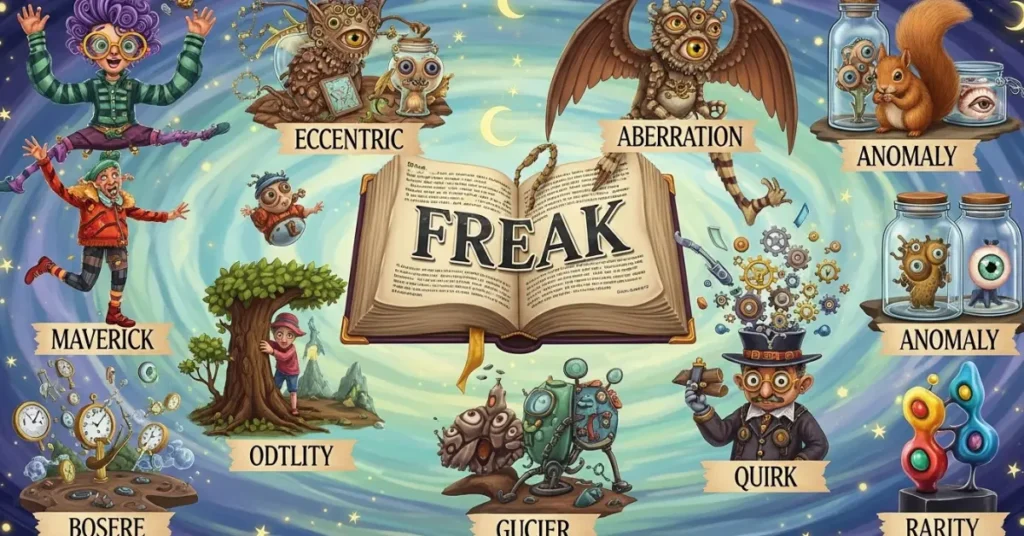
Sometimes we see someone or something that seems very different or strange. Maybe it is a person who loves unusual things, or an event that surprises everyone. Such a person or thing can be called a freak.
A freak is someone or something unusual, strange, or extreme. These words are useful in stories, essays, blogs, and daily conversations.
Below are 50 easy synonyms of freak written in simple English with meanings.
Synonyms List
1. Weirdo
Meaning: A person who is strange.
Difference: Informal and often playful.
Examples:
- He is a weirdo who collects rocks.
- Everyone calls her a weirdo for her unusual style.
2. Oddball
Meaning: Someone very unusual.
Difference: Fun or light way to describe unusual people.
Examples:
- My brother is an oddball who wears funny hats.
- The oddball surprised everyone with his idea.
3. Eccentric
Meaning: Person with strange habits.
Difference: Polite, can show uniqueness.
Examples:
- The artist is eccentric but talented.
- She lives in an eccentric way that is different from others.
4. Nut
Meaning: Crazy or unusual person.
Difference: Informal, sometimes joking.
Examples:
- He is a nut for climbing mountains.
- Don’t worry, she’s just a fun nut.
5. Quirky
Meaning: Strange in an interesting way.
Difference: Positive, unusual but fun.
Examples:
- She has a quirky style with colorful clothes.
- His quirky habits make people smile.
6. Fanatic
Meaning: Person with extreme interest.
Difference: Emphasizes obsession.
Examples:
- He is a sports fanatic.
- She is a music fanatic who knows every song.
7. Enthusiast
Meaning: Someone very interested in something.
Difference: Positive, shows passion.
Examples:
- He is a car enthusiast.
- She is a science enthusiast.
8. Devotee
Meaning: Person who loves or follows something.
Difference: Positive, shows loyalty or love.
Examples:
- He is a devotee of chess.
- She is a devotee of yoga.
9. Obsessive
Meaning: Person who thinks a lot about one thing.
Difference: Can be negative or intense.
Examples:
- He is obsessive about cleaning.
- She is obsessive about her collection.
10. Maniac
Meaning: Someone crazy or extreme.
Difference: Strong, sometimes exaggerated.
Examples:
- He’s a maniac about football.
- She’s a maniac who laughs loudly.
11. Oddity
Meaning: Something very unusual.
Difference: Can refer to things or people.
Examples:
- The painting is an oddity.
- He is an oddity in the town.
12. Freakish person
Meaning: Someone strange or unusual.
Difference: Similar to freak, descriptive.
Examples:
- He is a freakish person who talks to himself.
- That’s a freakish person with weird hobbies.
13. Strange one
Meaning: Someone unusual.
Difference: Simple, friendly description.
Examples:
- She’s a strange one who wears hats indoors.
- The strange one amazed everyone.
14. Bizarre person
Meaning: Someone very strange or unusual.
Difference: Stronger, emphasizes oddness.
Examples:
- He is a bizarre person with unique ideas.
- That bizarre person shocked everyone.
15. Weird individual
Meaning: A person who seems strange.
Difference: Polite and descriptive.
Examples:
- The weird individual paints houses upside down.
- She is a weird individual with unusual tastes.
16. Peculiar person
Meaning: Someone strange in a unique way.
Difference: Polite, unusual but not bad.
Examples:
- The peculiar person always wears purple.
- He is a peculiar person with strange hobbies.
17. Strange character
Meaning: Person with unusual behavior.
Difference: Focuses on behavior.
Examples:
- That strange character surprised the villagers.
- She is a strange character in the story.
18. Weirdie
Meaning: Informal term for strange person.
Difference: Casual, friendly tone.
Examples:
- He is a real weirdie.
- Everyone laughed at the weirdie in class.
19. Odd person
Meaning: A person not normal.
Difference: Simple and direct.
Examples:
- He is an odd person who talks to pets.
- She is an odd person at parties.
20. Outcast
Meaning: Person not accepted by others.
Difference: Focus on social rejection.
Examples:
- He felt like an outcast at school.
- The outcast walked alone in the park.
21. Misfit
Meaning: Person who doesn’t fit in.
Difference: Social or personality difference.
Examples:
- She is a misfit in the class.
- The misfit created a new club.
22. Odd fellow
Meaning: Unusual man.
Difference: Polite, older style.
Examples:
- He’s an odd fellow with strange ideas.
- That odd fellow is very kind.
23. Strange soul
Meaning: Unusual person.
Difference: Emphasizes inner nature.
Examples:
- He is a strange soul who loves solitude.
- She is a strange soul full of mystery.
24. Weird soul
Meaning: Person with strange nature.
Difference: Polite, descriptive of personality.
Examples:
- He is a weird soul who sings at night.
- The weird soul paints unusual pictures.
25. Eccentric soul
Meaning: Person with unusual habits.
Difference: Positive, unique personality.
Examples:
- She is an eccentric soul who loves odd clothes.
- He is an eccentric soul who writes poems.
26. Unusual person
Meaning: Different from others.
Difference: Polite and general.
Examples:
- She is an unusual person who laughs a lot.
- That unusual person surprised everyone.
27. Abnormal person
Meaning: Very different from normal.
Difference: Strong, sometimes negative.
Examples:
- He is an abnormal person with strange habits.
- The abnormal person shocked the group.
28. Weird man
Meaning: Man who is strange.
Difference: Simple and casual.
Examples:
- That weird man talks to animals.
- Everyone notices the weird man in town.
29. Odd woman
Meaning: Woman who seems unusual.
Difference: Simple and direct.
Examples:
- The odd woman wears mismatched shoes.
- She is an odd woman but very friendly.
30. Freaky person
Meaning: Very unusual or strange person.
Difference: Casual and fun tone.
Examples:
- He is a freaky person who dances in public.
- She is a freaky person with wild ideas.
31. Kooky
Meaning: Strange in a fun way.
Difference: Positive, playful.
Examples:
- The kooky person wore a hat with lights.
- She is kooky but lovable.
32. Unconventional person
Meaning: Person who does things differently.
Difference: Positive and respectful.
Examples:
- He is an unconventional person who paints on walls.
- She is unconventional in her thinking.
33. Odd character
Meaning: Unusual personality.
Difference: Descriptive, polite.
Examples:
- That odd character wrote poems on walls.
- She is an odd character with bright ideas.
34. Curious person
Meaning: Strange or interesting in actions.
Difference: Focus on unusual behavior.
Examples:
- The curious person collected leaves.
- He is a curious person who explores caves.
35. Strange being
Meaning: Someone very unusual.
Difference: Focuses on uniqueness.
Examples:
- That strange being surprised the town.
- She is a strange being full of mysteries.
36. Extraordinary person
Meaning: Very unusual or impressive.
Difference: Positive, emphasizes uniqueness.
Examples:
- He is an extraordinary person in science.
- She is an extraordinary person with talent.
37. Odd one out
Meaning: Person who is different.
Difference: Highlights contrast with others.
Examples:
- He is the odd one out in the group.
- She is the odd one out at parties.
38. Unusual character
Meaning: Someone unique or strange.
Difference: Polite description.
Examples:
- The unusual character loves adventure.
- She is an unusual character in the story.
39. Eccentric figure
Meaning: Strange or unusual person.
Difference: Formal and polite.
Examples:
- The eccentric figure wore bright colors.
- He is an eccentric figure in town.
40. Weird figure
Meaning: Person very different from others.
Difference: Simple, descriptive.
Examples:
- That weird figure scares children.
- She is a weird figure in her neighborhood.
41. Odd soul
Meaning: Strange person by nature.
Difference: Polite and descriptive.
Examples:
- He is an odd soul with funny habits.
- She is an odd soul who enjoys silence.
42. Strange entity
Meaning: Person or being unusual.
Difference: Slightly formal, can refer to supernatural or unusual events.
Examples:
- The strange entity appeared at night.
- He is a strange entity in our group.
43. Unconventional soul
Meaning: Person with unique ways.
Difference: Positive and respectful.
Examples:
- She is an unconventional soul who travels alone.
- He is an unconventional soul who paints murals.
44. Offbeat person
Meaning: Someone unusual or different.
Difference: Positive, playful.
Examples:
- He is an offbeat person who wears bright colors.
- She is an offbeat person with creative ideas.
45. Strange fellow
Meaning: Unusual man.
Difference: Simple and descriptive.
Examples:
- That strange fellow surprised the neighbors.
- He is a strange fellow with unique hobbies.
46. Weird individual
Meaning: Person who is unusual.
Difference: Simple, polite.
Examples:
- The weird individual loves collecting hats.
- She is a weird individual with bright ideas.
47. Peculiar figure
Meaning: Strange person or being.
Difference: Polite, descriptive.
Examples:
- The peculiar figure walked silently.
- He is a peculiar figure in our town.
48. Kooky figure
Meaning: Funny and unusual person.
Difference: Positive, playful.
Examples:
- The kooky figure danced in the street.
- She is a kooky figure with bright energy.
49. Curious character
Meaning: Person unusual in behavior.
Difference: Polite and descriptive.
Examples:
- The curious character explored every corner.
- He is a curious character in the story.
50. Unusual being
Meaning: Very different or strange.
Difference: Polite and general.
Examples:
- The unusual being appeared suddenly.
- She is an unusual being with great talent.
Conclusion
Learning synonyms of freak helps describe unusual or extreme people, habits, or events. Using these words improves writing, storytelling, and daily conversations.

I am a passionate English content writer and vocabulary specialist dedicated to creating clear, engaging, and easy-to-understand articles. I focus on helping readers expand their vocabulary and improve their English skills through simple, informative, and practical content. My goal is to make learning English enjoyable, accessible, and meaningful for everyone.