
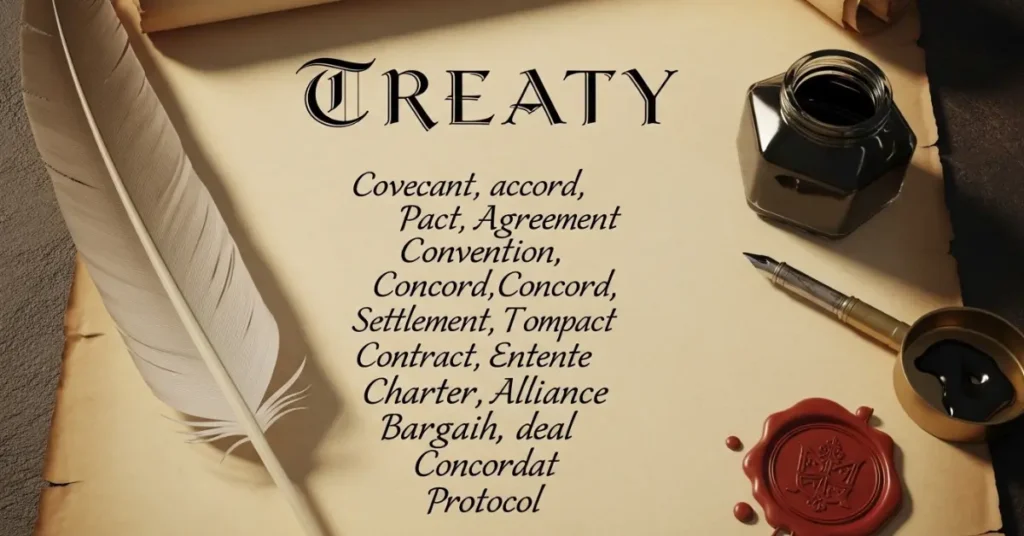
A treaty is an official agreement between countries or groups. It helps keep peace, share resources, or make rules.
A treaty is a formal agreement. Learning synonyms of treaty helps students, bloggers, and content writers describe agreements clearly. These words are useful in essays, articles, history lessons, and daily talk.
Below are 50 easy synonyms of treaty written in simple English.
Synonyms List
1. Agreement
Meaning: A plan or promise between people or groups.
Difference: General and simple.
Examples:
- They made an agreement to share food.
- The agreement stopped the argument.
2. Pact
Meaning: A formal promise between groups.
Difference: Short and strong word.
Examples:
- The countries signed a peace pact.
- We have a pact to help each other.
3. Accord
Meaning: Official understanding or arrangement.
Difference: Formal and diplomatic.
Examples:
- The accord ended the war.
- Both sides agreed to the accord.
4. Convention
Meaning: Agreement following rules or laws.
Difference: Often international.
Examples:
- They signed the climate convention.
- The convention protects animals.
5. Contract
Meaning: Written promise between parties.
Difference: Often legal and formal.
Examples:
- We signed a contract for the project.
- The contract guarantees payment.
6. Deal
Meaning: Arrangement or agreement.
Difference: Informal, casual.
Examples:
- They made a deal to trade goods.
- I got a good deal on the car.
7. Settlement
Meaning: Agreement to solve a problem.
Difference: Often ends disputes.
Examples:
- They reached a settlement in court.
- The settlement prevented a fight.
8. Understanding
Meaning: Mutual agreement or knowledge.
Difference: Informal, emphasizes mutual idea.
Examples:
- We have an understanding to meet weekly.
- There is an understanding between nations.
9. Arrangement
Meaning: Plan or agreement between people.
Difference: Simple and general.
Examples:
- The arrangement made work easier.
- They agreed on an arrangement for lunch.
10. Compact
Meaning: Formal agreement between parties.
Difference: Short and official.
Examples:
- The states signed a compact for trade.
- The compact promises cooperation.
11. Alliance
Meaning: Agreement to help each other.
Difference: Often political or military.
Examples:
- The countries formed an alliance.
- Our alliance strengthens peace.
12. Treaty document
Meaning: Written proof of an agreement.
Difference: Emphasizes the document itself.
Examples:
- The treaty document was signed yesterday.
- Scholars studied the treaty document.
13. Protocol
Meaning: Official rules or agreement.
Difference: Formal, often international.
Examples:
- They followed the protocol during talks.
- The protocol ensures safety.
14. Bond
Meaning: Promise to keep agreement.
Difference: Emphasizes trust.
Examples:
- The bond between nations grew stronger.
- We have a bond to help friends.
15. Charter
Meaning: Formal written agreement or rules.
Difference: Often establishes a group or rights.
Examples:
- The city charter created new laws.
- They signed the charter of cooperation.
16. Treaty agreement
Meaning: Formal agreement between countries.
Difference: Emphasizes official nature.
Examples:
- The treaty agreement was ratified.
- Both nations followed the treaty agreement.
17. Commitment
Meaning: Promise to act in a certain way.
Difference: Focus on obligation.
Examples:
- We made a commitment to share resources.
- His commitment helped the team succeed.
18. Dealings
Meaning: Agreements or interactions.
Difference: Informal, broad.
Examples:
- Their dealings were fair and honest.
- Business dealings often require contracts.
19. Treaty pact
Meaning: Formal pact or treaty.
Difference: Emphasizes combined formality.
Examples:
- The treaty pact was signed by leaders.
- The treaty pact ended disputes.
20. Understanding agreement
Meaning: Mutual agreement.
Difference: Highlights mutual understanding.
Examples:
- They reached an understanding agreement.
- The understanding agreement prevented conflict.
21. Arrangement pact
Meaning: Plan or agreement in simple terms.
Difference: Informal combination.
Examples:
- Our arrangement pact is simple.
- The arrangement pact saved time.
22. Settlement pact
Meaning: Agreement to resolve issues.
Difference: Focus on ending disputes.
Examples:
- The settlement pact avoided court.
- They signed a settlement pact yesterday.
23. Treaty deal
Meaning: Official treaty or deal.
Difference: Emphasizes both formal and practical.
Examples:
- The treaty deal was fair for both sides.
- Leaders discussed the treaty deal.
24. Alliance treaty
Meaning: Agreement of cooperation.
Difference: Military or political emphasis.
Examples:
- The alliance treaty strengthened security.
- Countries signed an alliance treaty.
25. Accord pact
Meaning: Formal accord combined with pact.
Difference: Strong, official term.
Examples:
- The accord pact ended disagreements.
- Both parties honored the accord pact.
26. Treaty settlement
Meaning: Official resolution or treaty.
Difference: Formal, resolution-focused.
Examples:
- The treaty settlement stopped the conflict.
- Scholars studied the treaty settlement.
27. Protocol agreement
Meaning: Formal agreement under rules.
Difference: Official, structured.
Examples:
- The protocol agreement was signed today.
- Nations followed the protocol agreement.
28. Contract treaty
Meaning: Legal and formal treaty.
Difference: Combines contract and treaty meaning.
Examples:
- The contract treaty was valid internationally.
- Both sides obeyed the contract treaty.
29. Peace treaty
Meaning: Agreement to stop war.
Difference: Focus on ending conflict.
Examples:
- The peace treaty ended the war.
- Countries signed a peace treaty for stability.
30. Mutual agreement
Meaning: Agreement accepted by both parties.
Difference: Emphasizes mutual consent.
Examples:
- We reached a mutual agreement on chores.
- The nations signed a mutual agreement.
31. Convention pact
Meaning: Formal agreement following rules.
Difference: International and structured.
Examples:
- The convention pact was ratified.
- Countries respect the convention pact.
32. International agreement
Meaning: Agreement between nations.
Difference: Global or diplomatic context.
Examples:
- The international agreement improved trade.
- Nations signed an international agreement.
33. Diplomatic agreement
Meaning: Agreement among diplomats.
Difference: Focus on politics and negotiation.
Examples:
- The diplomatic agreement eased tensions.
- Diplomats drafted a diplomatic agreement.
34. Treaty protocol
Meaning: Treaty following rules.
Difference: Formal, organized.
Examples:
- The treaty protocol ensures fairness.
- Leaders follow the treaty protocol.
35. Pact of understanding
Meaning: Agreement based on mutual ideas.
Difference: Informal, emphasizes cooperation.
Examples:
- They signed a pact of understanding.
- The pact of understanding helped both sides.
36. Formal agreement
Meaning: Official written agreement.
Difference: Emphasizes official status.
Examples:
- They made a formal agreement on trade.
- The formal agreement was approved.
37. Treaty charter
Meaning: Written official treaty.
Difference: Legal emphasis.
Examples:
- The treaty charter was stored in archives.
- Scholars studied the treaty charter.
38. Legal agreement
Meaning: Agreement recognized by law.
Difference: Focus on legal binding.
Examples:
- The legal agreement prevents disputes.
- They signed a legal agreement yesterday.
39. Peace accord
Meaning: Agreement to maintain peace.
Difference: Focus on ending conflict.
Examples:
- The peace accord stopped the fighting.
- Leaders praised the peace accord.
40. Binding agreement
Meaning: Agreement that must be followed.
Difference: Legally or morally binding.
Examples:
- This binding agreement is final.
- Both parties obeyed the binding agreement.
41. Treaty instrument
Meaning: Official document of treaty.
Difference: Legal or formal.
Examples:
- The treaty instrument is signed by leaders.
- Governments follow the treaty instrument.
42. Accord of nations
Meaning: Agreement between countries.
Difference: Focus on international relations.
Examples:
- The accord of nations reduced conflict.
- Countries celebrated the accord of nations.
43. Treaty settlement agreement
Meaning: Treaty that resolves issues.
Difference: Formal, dispute-focused.
Examples:
- The treaty settlement agreement was ratified.
- Leaders discussed the treaty settlement agreement.
44. Contractual treaty
Meaning: Treaty as a legal contract.
Difference: Focus on legal enforcement.
Examples:
- The contractual treaty was binding.
- Both parties obeyed the contractual treaty.
45. Bilateral agreement
Meaning: Agreement between two parties.
Difference: Specific to two sides.
Examples:
- The bilateral agreement was signed by both nations.
- They agreed on a bilateral agreement.
46. Multilateral treaty
Meaning: Agreement among many parties.
Difference: Involves multiple nations.
Examples:
- The multilateral treaty improved trade.
- Leaders praised the multilateral treaty.
47. Treaty covenant
Meaning: Formal promise in treaty form.
Difference: Emphasizes pledge.
Examples:
- The treaty covenant was honored by all sides.
- Nations followed the treaty covenant.
48. Formal pact
Meaning: Official promise or agreement.
Difference: Simple and formal.
Examples:
- The formal pact ended conflicts.
- Both leaders signed the formal pact.
49. Treaty alliance
Meaning: Treaty to form alliance.
Difference: Military or political focus.
Examples:
- The treaty alliance protected borders.
- Countries honored the treaty alliance.
50. International pact
Meaning: Agreement between countries.
Difference: Global focus.
Examples:
- The international pact improved cooperation.
- Leaders celebrated the international pact.
Conclusion
Learning synonyms of treaty helps describe agreements clearly. Using these words improves essays, blogs, speeches, and daily conversations. Practice them to make writing richer and more precise.

I am a passionate English content writer and vocabulary specialist dedicated to creating clear, engaging, and easy-to-understand articles. I focus on helping readers expand their vocabulary and improve their English skills through simple, informative, and practical content. My goal is to make learning English enjoyable, accessible, and meaningful for everyone.