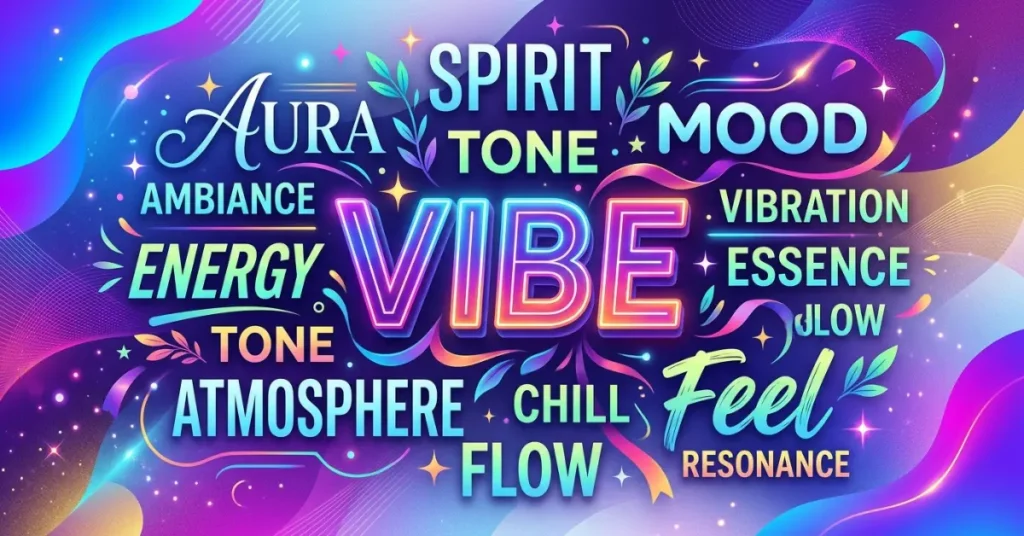
Vibe means the feeling, mood, or atmosphere a person, place, or thing gives.
One afternoon, Ali walked into a small café with soft music, warm lights, and friendly people. He immediately felt comfortable and relaxed. Later, he told his friend, “This place has a great vibe.” His friend smiled because he understood exactly what Ali meant. The café created a pleasant feeling that made people enjoy being there.
The word vibe means the feeling, mood, energy, or atmosphere that a person, event, or situation gives off. It is commonly used in conversations, social media, blogs, stories, and everyday speech. Learning synonyms for vibe can help students and learners express feelings and impressions. These words can make essays, stories, and conversations more colorful and engaging.
Synonyms List
1. Mood
Meaning: The feeling of a place or situation.
Examples:
- The room had a happy mood.
- Her mood improved quickly.
2. Atmosphere
Meaning: The feeling created by a place.
Examples:
- The atmosphere was friendly.
- We loved the atmosphere.
3. Feeling
Meaning: An emotion or impression.
Examples:
- I got a good feeling.
- The place gave a calm feeling.
4. Energy
Meaning: The spirit or excitement of a place.
Examples:
- The event had great energy.
- She brought positive energy.
5. Aura
Meaning: A special feeling around someone or something.
Examples:
- She had a peaceful aura.
- The place had a magical aura.
6. Spirit
Meaning: The character or feeling of something.
Examples:
- The team showed great spirit.
- The spirit of the event was joyful.
7. Tone
Meaning: The general feeling or style.
Examples:
- The tone was cheerful.
- The meeting had a serious tone.
8. Ambiance
Meaning: The mood of a place.
Examples:
- The restaurant had a cozy ambiance.
- We enjoyed the ambiance.
9. Impression
Meaning: The feeling someone gets.
Examples:
- He made a good impression.
- The town left a positive impression.
10. Character
Meaning: The special qualities of something.
Examples:
- The village has character.
- The building has unique character.
11. Personality
Meaning: The special nature of a person or place.
Examples:
- The café has personality.
- Her personality is warm.
12. Essence
Meaning: The most important feeling or quality.
Examples:
- The essence of the city is exciting.
- She captured the essence of friendship.
13. Flavor
Meaning: A special style or feeling.
Examples:
- The event had a local flavor.
- The story has a fun flavor.
14. Style
Meaning: A particular way of being.
Examples:
- The shop has a modern style.
- Her style is unique.
15. Feel
Meaning: The overall impression of something.
Examples:
- The room has a warm feel.
- The event had a festive feel.
16. Climate
Meaning: The general mood of a group or place.
Examples:
- The office climate improved.
- The social climate changed.
17. Setting
Meaning: The environment of a place.
Examples:
- The setting was beautiful.
- We loved the setting.
18. Environment
Meaning: The surroundings and feeling.
Examples:
- The environment was peaceful.
- Children need a positive environment.
19. Scene
Meaning: The atmosphere of a place or group.
Examples:
- The music scene is growing.
- We enjoyed the local scene.
20. Air
Meaning: A feeling that surrounds something.
Examples:
- There was an air of excitement.
- He had an air of confidence.
21. Presence
Meaning: A noticeable feeling or influence.
Examples:
- She has a calming presence.
- His presence changed the room.
22. Magnetism
Meaning: A quality that attracts people.
Examples:
- She has natural magnetism.
- The place has magnetism.
23. Charm
Meaning: A pleasant and attractive quality.
Examples:
- The town has charm.
- Her charm impressed everyone.
24. Appeal
Meaning: A quality that attracts people.
Examples:
- The park has great appeal.
- The event had wide appeal.
25. Attraction
Meaning: Something that draws people in.
Examples:
- The attraction was strong.
- The café is a local attraction.
26. Warmth
Meaning: A friendly feeling.
Examples:
- She showed warmth.
- The room felt full of warmth.
27. Friendliness
Meaning: A welcoming feeling.
Examples:
- The staff showed friendliness.
- We noticed their friendliness.
28. Comfort
Meaning: A relaxing feeling.
Examples:
- The home offered comfort.
- The comfort was noticeable.
29. Peacefulness
Meaning: A calm feeling.
Examples:
- The garden had peacefulness.
- We enjoyed the peacefulness.
30. Calmness
Meaning: A quiet and relaxed feeling.
Examples:
- Her calmness helped others.
- The calmness was refreshing.
31. Relaxed Feeling
Meaning: A stress-free mood.
Examples:
- The beach had a relaxed feeling.
- We enjoyed the relaxed feeling.
32. Positive Energy
Meaning: A good and uplifting feeling.
Examples:
- She brings positive energy.
- The event had positive energy.
33. Good Feeling
Meaning: A pleasant impression.
Examples:
- I had a good feeling.
- The place gave a good feeling.
34. Sensation
Meaning: A feeling or impression.
Examples:
- The sensation was pleasant.
- I felt a strange sensation.
35. Emotion
Meaning: A strong feeling.
Examples:
- The song created emotion.
- Her words showed emotion.
36. Sentiment
Meaning: A feeling or attitude.
Examples:
- Public sentiment was positive.
- The sentiment changed.
37. Outlook
Meaning: A general attitude.
Examples:
- She has a positive outlook.
- His outlook improved.
38. Attitude
Meaning: A way of thinking or feeling.
Examples:
- Her attitude was positive.
- He changed his attitude.
39. Temper
Meaning: A person’s mood.
Examples:
- He was in a good temper.
- Her temper improved.
40. Mindset
Meaning: A way of thinking.
Examples:
- Success needs a positive mindset.
- Her mindset inspired others.
41. Nature
Meaning: The basic character of something.
Examples:
- The nature of the event was fun.
- His nature is kind.
42. Quality
Meaning: A special characteristic.
Examples:
- The place has a welcoming quality.
- Her best quality is kindness.
43. Trait
Meaning: A characteristic feature.
Examples:
- Confidence is a good trait.
- Patience is her trait.
44. Feature
Meaning: An important part or quality.
Examples:
- Friendliness is a key feature.
- The best feature was the atmosphere.
45. Characteristic
Meaning: A typical quality.
Examples:
- Kindness is her characteristic.
- The town’s characteristic is peace.
46. Identity
Meaning: The unique nature of something.
Examples:
- The city has a strong identity.
- The café has its own identity.
47. Signature Feel
Meaning: A unique atmosphere.
Examples:
- The hotel has a signature feel.
- The brand created a signature feel.
48. Distinctive Feeling
Meaning: A special impression.
Examples:
- The room had a distinctive feeling.
- We noticed the distinctive feeling.
49. Moodiness
Meaning: A strong emotional atmosphere.
Examples:
- The movie had moodiness.
- The sky added moodiness.
50. Emotional Tone
Meaning: The feeling expressed.
Examples:
- The emotional tone was hopeful.
- The speech had a warm emotional tone.
51. Cheerfulness
Meaning: A happy feeling.
Examples:
- The party was full of cheerfulness.
- Her cheerfulness spread quickly.
52. Happiness
Meaning: A feeling of joy.
Examples:
- The room felt full of happiness.
- Her happiness was clear.
53. Joyfulness
Meaning: Great happiness.
Examples:
- The celebration had joyfulness.
- Children showed joyfulness.
54. Excitement
Meaning: A feeling of enthusiasm.
Examples:
- The game created excitement.
- There was excitement everywhere.
55. Enthusiasm
Meaning: Strong interest and energy.
Examples:
- She showed enthusiasm.
- The crowd had enthusiasm.
56. Buzz
Meaning: Excited activity and energy.
Examples:
- The event created buzz.
- The town had a lively buzz.
57. Liveliness
Meaning: Full of life and energy.
Examples:
- The market had liveliness.
- We loved the liveliness.
58. Vibrancy
Meaning: Bright and energetic feeling.
Examples:
- The city has vibrancy.
- The festival showed vibrancy.
59. Vitality
Meaning: Strong energy and life.
Examples:
- She has vitality.
- The area showed vitality.
60. Dynamism
Meaning: Active energy.
Examples:
- The team showed dynamism.
- The company has dynamism.
61. Glow
Meaning: A warm and positive feeling.
Examples:
- The room had a glow.
- Her smile created a glow.
62. Spark
Meaning: A lively quality.
Examples:
- He has a creative spark.
- The event had a spark.
63. Magic
Meaning: A special and wonderful feeling.
Examples:
- The evening felt like magic.
- The place had magic.
64. Enchantment
Meaning: A charming feeling.
Examples:
- The garden had enchantment.
- We felt enchantment there.
65. Allure
Meaning: A powerful attraction.
Examples:
- The town has allure.
- Her confidence has allure.
66. Fascination
Meaning: Strong interest and attraction.
Examples:
- The museum created fascination.
- His story inspired fascination.
67. Coolness
Meaning: A stylish feeling.
Examples:
- The place had coolness.
- His style showed coolness.
68. Trendiness
Meaning: Being fashionable.
Examples:
- The café has trendiness.
- The area is known for trendiness.
69. Hip Feeling
Meaning: A modern and fashionable vibe.
Examples:
- The shop had a hip feeling.
- The area felt hip.
70. Modern Feel
Meaning: A contemporary atmosphere.
Examples:
- The office had a modern feel.
- The building has a modern feel.
71. Rustic Feel
Meaning: A simple country atmosphere.
Examples:
- The cabin had a rustic feel.
- We loved the rustic feel.
72. Cozy Atmosphere
Meaning: A warm and comfortable feeling.
Examples:
- The café had a cozy atmosphere.
- We enjoyed the cozy atmosphere.
73. Welcoming Atmosphere
Meaning: A friendly environment.
Examples:
- The hotel had a welcoming atmosphere.
- Everyone liked the welcoming atmosphere.
74. Positive Spirit
Meaning: An encouraging feeling.
Examples:
- The team had a positive spirit.
- Her positive spirit inspired others.
75. Friendly Spirit
Meaning: A kind and open feeling.
Examples:
- The group had a friendly spirit.
- We enjoyed the friendly spirit.
76. Community Feeling
Meaning: A sense of togetherness.
Examples:
- The event created community feeling.
- The town has community feeling.
77. Togetherness
Meaning: A feeling of unity.
Examples:
- The holiday brought togetherness.
- We felt togetherness.
78. Unity
Meaning: A feeling of being connected.
Examples:
- The group showed unity.
- Unity improved the atmosphere.
79. Harmony
Meaning: Peaceful agreement.
Examples:
- The room felt full of harmony.
- Harmony made everyone comfortable.
80. Balance
Meaning: A stable and pleasant feeling.
Examples:
- The design created balance.
- The room felt balanced.
81. Flow
Meaning: A smooth feeling or movement.
Examples:
- The conversation had flow.
- The event had a natural flow.
82. Rhythm
Meaning: A regular and pleasant pattern.
Examples:
- The city has its own rhythm.
- Life found a rhythm.
83. Pulse
Meaning: The energy of a place.
Examples:
- The city has a strong pulse.
- We felt the pulse of the event.
84. Heartbeat
Meaning: The central energy of something.
Examples:
- The market is the heartbeat of town.
- Music was the heartbeat of the event.
85. Mood Setting
Meaning: Something that creates atmosphere.
Examples:
- The lights provided mood setting.
- Music helped with mood setting.
86. Emotional Feel
Meaning: The emotional impression.
Examples:
- The movie had an emotional feel.
- The story gave an emotional feel.
87. Pleasant Atmosphere
Meaning: A nice feeling.
Examples:
- The park had a pleasant atmosphere.
- We enjoyed the pleasant atmosphere.
88. Positive Mood
Meaning: A happy atmosphere.
Examples:
- The event created a positive mood.
- The positive mood spread quickly.
89. Relaxing Mood
Meaning: A calm atmosphere.
Examples:
- The music created a relaxing mood.
- We enjoyed the relaxing mood.
90. Inspiring Feeling
Meaning: A feeling that encourages action.
Examples:
- The speech gave an inspiring feeling.
- The museum created an inspiring feeling.
91. Motivating Energy
Meaning: Energy that encourages effort.
Examples:
- The coach brought motivating energy.
- The event had motivating energy.
92. Uplifting Spirit
Meaning: A positive and encouraging feeling.
Examples:
- Her words had an uplifting spirit.
- The gathering showed uplifting spirit.
93. Good Atmosphere
Meaning: A pleasant environment.
Examples:
- The restaurant had a good atmosphere.
- Everyone enjoyed the good atmosphere.
94. Pleasant Feeling
Meaning: A nice impression.
Examples:
- The place gave a pleasant feeling.
- We left with a pleasant feeling.
95. Positive Impression
Meaning: A good first feeling.
Examples:
- He made a positive impression.
- The hotel left a positive impression.
96. Memorable Feeling
Meaning: An impression that stays in memory.
Examples:
- The trip gave a memorable feeling.
- The event left a memorable feeling.
97. Unique Atmosphere
Meaning: A special feeling.
Examples:
- The café had a unique atmosphere.
- The city offers a unique atmosphere.
98. Distinct Mood
Meaning: A clearly different feeling.
Examples:
- The movie had a distinct mood.
- The place offered a distinct mood.
99. Overall Feeling
Meaning: The general impression.
Examples:
- The overall feeling was positive.
- We liked the overall feeling.
100. Vibe
Meaning: The feeling, mood, energy, or atmosphere that a person, place, or thing gives.
Examples:
- This café has a great vibe.
- I like the vibe of this place.
Conclusion
Learning synonyms for vibe can improve your writing, blogging, speaking, and communication skills. These words help you describe moods, feelings, energy, atmosphere, and impressions. Practice using them in essays, emails, blog posts, stories, and daily conversations. The more synonyms you learn, the richer and more expressive your English will become.

I am a passionate English content writer and vocabulary specialist dedicated to creating clear, engaging, and easy-to-understand articles. I focus on helping readers expand their vocabulary and improve their English skills through simple, informative, and practical content. My goal is to make learning English enjoyable, accessible, and meaningful for everyone.