One day, Sara could not finish her homework because of a small problem with her notebook. She told her teacher she had some issues. The teacher explained that issues can mean problems or topics to discuss.
The word issues can mean problems, difficulties, or important matters. It is useful in school, writing, and daily conversation.
Learning synonyms for issues helps students explain ideas clearly and improve their vocabulary.
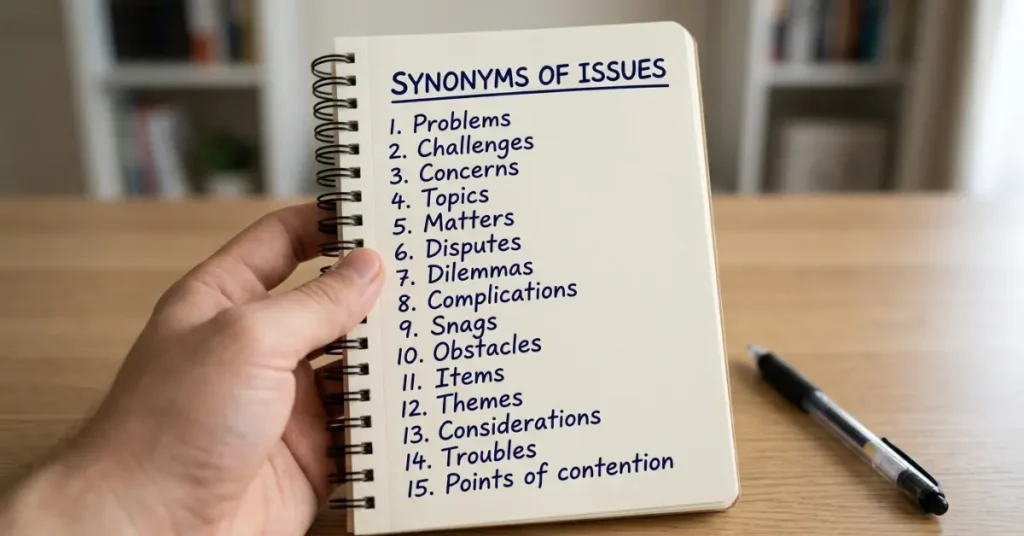
Below are 100 simple synonyms for issues with meanings and examples.
1. Problems
Meaning: Things that are hard to deal with.
Examples: He has problems with math. She solved her problems quickly.
2. Difficulties
Meaning: Things that are not easy.
Examples: He faced difficulties in school. She overcame many difficulties.
3. Troubles
Meaning: Worries or problems.
Examples: He shared his troubles. She had many troubles.
4. Challenges
Meaning: Hard situations to face.
Examples: He faced new challenges. She enjoys challenges.
5. Concerns
Meaning: Things that worry you.
Examples: He raised concerns. She has concerns about the test.
6. Matters
Meaning: Things to think about or discuss.
Examples: This is an important matter. They discussed the matter.
7. Topics
Meaning: Subjects to talk about.
Examples: They chose topics for class. This topic is interesting.
8. Subjects
Meaning: Areas of discussion or study.
Examples: Math is a subject. They talked about many subjects.
9. Questions
Meaning: Things needing answers.
Examples: He asked questions. She answered all the questions.
10. Complications
Meaning: Problems that make things harder.
Examples: There were complications in the plan. The illness had complications.
11. Obstacles
Meaning: Things that block progress.
Examples: He faced obstacles. She overcame obstacles.
12. Barriers
Meaning: Things that stop movement or progress.
Examples: Language is a barrier. They broke barriers.
13. Hurdles
Meaning: Small challenges to cross.
Examples: He crossed many hurdles. She jumped over hurdles.
14. Setbacks
Meaning: Delays or problems.
Examples: He had setbacks. She recovered from setbacks.
15. Conflicts
Meaning: Disagreements or fights.
Examples: They had conflicts. She avoided conflicts.
16. Disputes
Meaning: Arguments or disagreements.
Examples: They had a dispute. She settled the dispute.
17. Arguments
Meaning: Strong disagreements.
Examples: They had arguments. She avoided arguments.
18. Concerns
Meaning: Worries or cares about something.
Examples: He expressed concerns. She shared concerns.
19. Complications
Meaning: Extra problems.
Examples: The plan had complications. There were complications.
20. Snags
Meaning: Small unexpected problems.
Examples: They hit a snag. The plan had snags.
21. Glitches
Meaning: Small faults or problems.
Examples: The system had glitches. They fixed the glitches.
22. Bugs
Meaning: Errors in systems.
Examples: The app had bugs. They removed bugs.
23. Errors
Meaning: Mistakes.
Examples: He made errors. She corrected errors.
24. Faults
Meaning: Weak points or mistakes.
Examples: The machine had faults. They fixed the faults.
25. Defects
Meaning: Flaws or problems.
Examples: The product had defects. They replaced defective items.
26. Flaws
Meaning: Small problems or weaknesses.
Examples: The plan has flaws. He noticed flaws.
27. Weaknesses
Meaning: Areas of low strength.
Examples: He has weaknesses. She improved her weaknesses.
28. Limitations
Meaning: Things that restrict.
Examples: The plan has limitations. They accepted limitations.
29. Concerns
Meaning: Things needing attention.
Examples: Health concerns matter. They discussed concerns.
30. Risks
Meaning: Chances of problems.
Examples: There are risks. He took risks.
31. Dangers
Meaning: Possible harm.
Examples: The road has dangers. They avoided dangers.
32. Threats
Meaning: Possible harm or danger.
Examples: There were threats. They handled threats.
33. Worries
Meaning: Things that cause stress.
Examples: He had worries. She shared worries.
34. Burdens
Meaning: Heavy problems.
Examples: He carried burdens. She reduced burdens.
35. Pressures
Meaning: Stress or force.
Examples: He felt pressure. She handled pressure.
36. Struggles
Meaning: Hard efforts or problems.
Examples: He faced struggles. She overcame struggles.
37. Troublesome matters
Meaning: Difficult situations.
Examples: He faced troublesome matters. She solved them.
38. Cases
Meaning: Situations to handle.
Examples: They studied cases. He solved cases.
39. Situations
Meaning: Conditions or problems.
Examples: This situation is hard. They handled the situation.
40. Conditions
Meaning: States or situations.
Examples: The conditions were poor. They improved conditions.
41. Affairs
Meaning: Important matters.
Examples: State affairs matter. He handled affairs.
42. Points
Meaning: Topics to discuss.
Examples: He made points. She explained the points.
43. Items
Meaning: Things to consider.
Examples: They listed items. He checked items.
44. Topics of concern
Meaning: Matters needing attention.
Examples: They discussed topics of concern. He raised concerns.
45. Matters of interest
Meaning: Important topics.
Examples: These are matters of interest. They discussed them.
46. Talking points
Meaning: Ideas to discuss.
Examples: He prepared talking points. She used them in speech.
47. Discussion points
Meaning: Topics for discussion.
Examples: They listed discussion points. He explained them.
48. Key matters
Meaning: Important issues.
Examples: They focused on key matters. He explained them.
49. Core problems
Meaning: Main difficulties.
Examples: They found core problems. She solved them.
50. Main concerns
Meaning: Important worries.
Examples: These are main concerns. They discussed them.
51. Roadblocks
Meaning: Things that stop progress.
Examples: They faced roadblocks. He removed roadblocks.
52. Pitfalls
Meaning: Hidden problems.
Examples: They avoided pitfalls. He warned about pitfalls.
53. Drawbacks
Meaning: Negative points.
Examples: This plan has drawbacks. He explained drawbacks.
54. Downsides
Meaning: Negative parts.
Examples: There are downsides. She explained them.
55. Shortcomings
Meaning: Weak points.
Examples: The plan has shortcomings. He fixed them.
56. Imperfections
Meaning: Small faults.
Examples: Nothing is perfect. There are imperfections.
57. Inconveniences
Meaning: Small problems.
Examples: There were inconveniences. They managed them.
58. Annoyances
Meaning: Small irritating problems.
Examples: The noise was an annoyance. They ignored annoyances.
59. Hassles
Meaning: Troubles or difficulties.
Examples: Travel had hassles. He avoided hassles.
60. Headaches
Meaning: Problems causing stress.
Examples: This task is a headache. He solved the headache.
61. Predicaments
Meaning: Difficult situations.
Examples: He was in a predicament. She solved it.
62. Dilemmas
Meaning: Hard choices.
Examples: He faced a dilemma. She made a choice.
63. Quandaries
Meaning: Confusing problems.
Examples: He was in a quandary. She found a solution.
64. Fixes
Meaning: Difficult situations.
Examples: He was in a fix. She helped him.
65. Messes
Meaning: Problem situations.
Examples: They made a mess. He cleaned the mess.
66. Troublespots
Meaning: Areas with problems.
Examples: This is a troublespot. They fixed it.
67. Pain points
Meaning: Problem areas.
Examples: They found pain points. He solved them.
68. Gray areas
Meaning: unclear issues.
Examples: This is a gray area. They discussed it.
69. Matters at hand
Meaning: current issues.
Examples: Focus on matters at hand. He solved them.
70. Pending matters
Meaning: unfinished issues.
Examples: There are pending matters. He completed them.
71. Open questions
Meaning: unanswered issues.
Examples: There are open questions. She answered them.
72. Talking issues
Meaning: discussion topics.
Examples: They discussed talking issues. He explained them.
73. Key concerns
Meaning: main problems.
Examples: These are key concerns. They solved them.
74. Major problems
Meaning: big difficulties.
Examples: They faced major problems. He fixed them.
75. Minor problems
Meaning: small difficulties.
Examples: These are minor problems. She solved them.
76. Big issues
Meaning: important problems.
Examples: These are big issues. They discussed them.
77. Small issues
Meaning: minor problems.
Examples: These are small issues. He ignored them.
78. Serious issues
Meaning: important problems.
Examples: These are serious issues. They solved them.
79. Urgent matters
Meaning: issues needing quick action.
Examples: These are urgent matters. He handled them fast.
80. Critical issues
Meaning: very important problems.
Examples: These are critical issues. They fixed them.
81. Main topics
Meaning: key discussion subjects.
Examples: These are the main topics. He explained them.
82. Discussion themes
Meaning: subjects to discuss.
Examples: They chose themes. He presented them.
83. Focus areas
Meaning: main points.
Examples: These are focus areas. She worked on them.
84. Key points
Meaning: main ideas.
Examples: He listed key points. She explained them.
85. Talking subjects
Meaning: discussion topics.
Examples: They picked subjects. He explained them.
86. Matters of concern
Meaning: worrying issues.
Examples: These are matters of concern. They discussed them.
87. Items of concern
Meaning: important problems.
Examples: They listed items of concern. He solved them.
88. Areas of concern
Meaning: problem areas.
Examples: These are areas of concern. They improved them.
89. Trouble areas
Meaning: places with problems.
Examples: This is a trouble area. They fixed it.
90. Weak areas
Meaning: areas with problems.
Examples: These are weak areas. He improved them.
91. Risk areas
Meaning: areas with danger.
Examples: These are risk areas. They avoided them.
92. Problem areas
Meaning: areas with issues.
Examples: These are problem areas. He fixed them.
93. Concern areas
Meaning: areas needing attention.
Examples: These are concerned areas. They improved them.
94. Discussion matters
Meaning: topics to discuss.
Examples: These are discussion matters. He explained them.
95. Debate topics
Meaning: topics for argument.
Examples: They chose debate topics. He argued well.
96. Talking matters
Meaning: subjects for discussion.
Examples: They discussed talking matters. He explained them.
97. Key questions
Meaning: important issues to answer.
Examples: These are key questions. She answered them.
98. Inquiry points
Meaning: points needing answers.
Examples: They listed inquiry points. He solved them.
99. Problem points
Meaning: parts with issues.
Examples: These are problem points. She fixed them.
100. Concern points
Meaning: important issues.
Examples: These are concern points. They discussed them.
Conclusion
The word issues helps us talk about problems and important topics. Learning these synonyms improves your writing and makes your ideas clearer.

I am a passionate English content writer and vocabulary specialist dedicated to creating clear, engaging, and easy-to-understand articles. I focus on helping readers expand their vocabulary and improve their English skills through simple, informative, and practical content. My goal is to make learning English enjoyable, accessible, and meaningful for everyone.