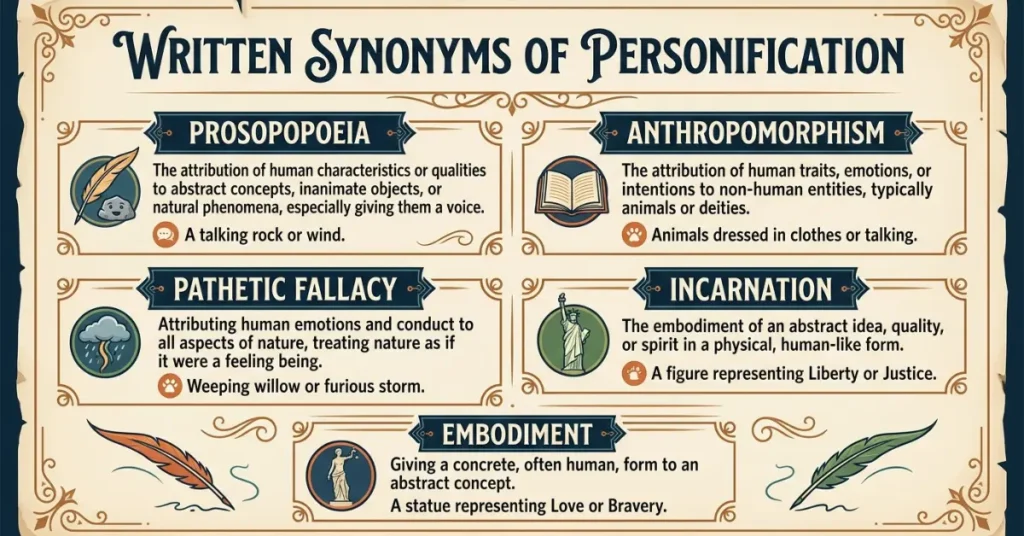
Personification is when we give human qualities like feeling to things that are not human.
Ali read a story where the wind “whispered” and the sun “smiled.” His teacher explained that this is called personification. It means we treat animals, objects or nature like they are human.
Learning similar words helps improve reading, writing, and understanding stories.
Below are 100 simple synonyms for “personification” with meanings and examples.
1. Human-like expression
Meaning: Giving human style to something.
Examples: The story used human-like expressions.
The poem has human-like expressions.
2. Human traits in objects
Meaning: Giving human qualities to things.
Examples: The writer used human traits in objects.
The story shows human traits in objects.
3. Human behavior in things
Meaning: Making things act like humans.
Examples: The wind shows human behavior in things.
The story uses human behavior in things.
4. Living description
Meaning: Making non-living things feel alive.
Examples: The poem has living description.
The writer used living descriptions.
5. Human-style writing
Meaning: Writing that gives human features.
Examples: The story uses human-style writing.
The author uses human-style writing.
6. Animated description
Meaning: Giving life-like qualities.
Examples: The sun has animated description.
The story uses animated descriptions.
7. Living imagery
Meaning: Making pictures feel alive.
Examples: The story uses living imagery.
The poem has living imagery.
8. Human form in writing
Meaning: Giving human form in description.
Examples: The wind shows human form in writing.
The story uses human form in writing.
9. Talking objects style
Meaning: Objects shown as talking.
Examples: The book uses talking objects style.
The story has a talking object style.
10. Emotional objects
Meaning: Objects shown with feelings.
Examples: The poem shows emotional objects.
The story has emotional objects.
11. Living imagination
Meaning: Making imagination feel alive.
Examples: The writer uses living imagination.
The story has a vivid imagination.
12. Human feeling style
Meaning: Giving feelings to things.
Examples: The wind shows human feeling style.
The story uses human feeling style.
13. Life-giving words
Meaning: Words that give life to objects.
Examples: The poem uses life-giving words.
The story has life-giving words.
14. Human touch writing
Meaning: Writing with human qualities.
Examples: The author uses human touch writing.
The story has human touch writing.
15. Living object style
Meaning: Making objects feel alive.
Examples: The sun shows living object style.
The story uses living object style.
16. Person-like description
Meaning: Making things like persons.
Examples: The wind has a person-like description.
The poem uses a person-like description.
17. Human action style
Meaning: Giving actions to objects.
Examples: The storm shows human action style.
The story uses human action style.
18. Living story style
Meaning: Making stories feel alive.
Examples: The book uses a living story style.
The poem has a living story style.
19. Emotional storytelling
Meaning: Giving feelings to stories.
Examples: The writer uses emotional storytelling.
The story has emotional storytelling.
20. Animated writing style
Meaning: Writing that feels alive.
Examples: The poem uses animated writing style.
The story has an animated writing style.
21. Human expression in nature
Meaning: Nature shown like humans.
Examples: The wind shows human expression in nature.
The story uses human expression in nature.
22. Talking nature style
Meaning: Nature shown as talking.
Examples: The tree uses talking nature style.
The poem has a talking nature style.
23. Living nature description
Meaning: Nature shown as alive.
Examples: The forest has living nature description.
The story uses living nature description.
24. Human action in nature
Meaning: Nature doing human actions.
Examples: The sun shows human action in nature.
The wind uses human action in nature.
25. Emotional nature style
Meaning: Nature shown with feelings.
Examples: The storm has an emotional nature style.
The poem uses an emotional nature style.
26. Living metaphor style
Meaning: Giving life to metaphors.
Examples: The story uses living metaphor style.
The poem has a living metaphor style.
27. Human voice writing
Meaning: Objects shown as speaking.
Examples: The wind has human voice writing.
The story uses human voice writing.
28. Talking imagery style
Meaning: Pictures that seem to talk.
Examples: The poem uses talking imagery style.
The story has a talking imagery style.
29. Animated object style
Meaning: Objects shown as active.
Examples: The sun has animated object style.
The story uses animated object style.
30. Living scene writing
Meaning: Scenes that feel alive.
Examples: The story uses living scene writing.
The poem has living scene writing.
31. Humanized nature writing
Meaning: Nature shown as human.
Examples: The wind shows humanized nature writing.
The story uses humanized nature writing.
32. Emotional object writing
Meaning: Objects shown with emotion.
Examples: The poem uses emotional object writing.
The story has emotional object writing.
33. Talking world style
Meaning: World shown as talking.
Examples: The story uses talking world style.
The poem has a talking world style.
34. Living world description
Meaning: World shown as alive.
Examples: The story has a living world description.
The poem uses living world description.
35. Human nature voice
Meaning: Nature speaking like humans.
Examples: The wind uses human nature.
The story has a human nature voice.
36. Animated nature writing
Meaning: Nature shown as active.
Examples: The story uses animated nature writing.
The poem has animated nature writing.
37. Emotional nature expression
Meaning: Nature showing feelings.
Examples: The storm shows emotional nature expression.
The story uses emotional expressions.
38. Living object voice
Meaning: Objects shown as speaking.
Examples: The wind has a living object voice.
The story uses a living object voice.
39. Human-like world view
Meaning: World shown like humans.
Examples: The poem uses a human-like world view.
The story has a human-like world view.
40. Animated life writing
Meaning: Life shown as active.
Examples: The story uses animated life writing.
The poem has animated life writing.
41. Talking object expression
Meaning: Objects shown speaking.
Examples: The wind uses talking object expression.
The story has talking object expressions.
42. Living language style
Meaning: Language that feels alive.
Examples: The poem uses living language style.
The story has a living language style.
43. Human story style
Meaning: Story with human traits in objects.
Examples: The story uses human story style.
The poem has a human story style.
44. Emotional world writing
Meaning: World shown with feelings.
Examples: The story uses emotional world writing.
The poem has emotional world writing.
45. Animated world style
Meaning: World shown as alive.
Examples: The poem uses animated world style.
The story has an animated world style.
46. Living expression writing
Meaning: Expression that feels alive.
Examples: The wind uses living expression writing.
The story has living expression writing.
47. Human feeling narration
Meaning: Story with human feelings in objects.
Examples: The story uses human feeling narration.
The poem has human feeling narration.
48. Talking nature writing
Meaning: Nature shown as speaking.
Examples: The wind uses talking nature writing.
The story has natural writing.
49. Living imagination writing
Meaning: Imagination that feels alive.
Examples: The poem uses living imagination writing.
The story has living imagination.
50. Emotional imagery style
Meaning: Images with feelings.
Examples: The story uses emotional imagery style.
The poem has an emotional imagery style.
51. Human-like imagination
Meaning: Imagination with human traits.
Examples: The story uses human-like imagination.
The poem has a human-like imagination.
52. Animated expression writing
Meaning: Expression that feels alive.
Examples: The wind uses animated expression writing.
The story has animated expression writing.
53. Living poetic style
Meaning: Poetry that feels alive.
Examples: The poem uses living poetic style.
The story has a lively poetic style.
54. Talking emotion style
Meaning: Emotions shown as speaking.
Examples: The story uses talking emotion style.
The poem has an emotional talking style.
55. Humanized storytelling
Meaning: Storytelling with human traits in things.
Examples: The story uses humanized storytelling.
The poem has humanized storytelling.
56. Emotional expression style
Meaning: Expression with feelings.
Examples: The story uses emotional expression style.
The poem has an emotional expression style.
57. Living description style
Meaning: Description that feels alive.
Examples: The wind uses living description style.
The story has a living description style.
58. Animated narrative style
Meaning: Story that feels alive.
Examples: The poem uses animated narrative style.
The story has an animated narrative style.
59. Human voice imagery
Meaning: Imagery that speaks like humans.
Examples: The wind uses human voice imagery.
The story has human voice imagery.
60. Living metaphor writing
Meaning: Metaphors that feel alive.
Examples: The story uses living metaphor writing.
The poem has living metaphor writing.
61. Emotional storytelling style
Meaning: Story with feelings in objects.
Examples: The story uses emotional storytelling style.
The poem has an emotional storytelling style.
62. Human expression narrative
Meaning: Narrative with human traits in things.
Examples: The story uses human expression narrative.
The poem has a human expression narrative.
63. Talking life writing
Meaning: Life shown as speaking.
Examples: The wind uses talking life writing.
The story is about life writing.
64. Animated nature voice
Meaning: Nature shown as speaking.
Examples: The storm uses animated nature voices.
The story has an animated nature voice.
65. Living story imagery
Meaning: Story with life-like images.
Examples: The poem uses living story imagery.
The story has living story imagery.
66. Emotional nature writing
Meaning: Nature shown with feelings.
Examples: The wind uses emotional nature writing.
The story has an emotional nature.
67. Human-like object voice
Meaning: Objects speaking like humans.
Examples: The wind uses human-like object voices.
The story has a human-like object voice.
68. Living world voice
Meaning: World shown as speaking.
Examples: The story uses the living world’s voice.
The poem has a living world voice.
69. Animated feeling writing
Meaning: Feelings shown as alive.
Examples: The story uses animated feeling writing.
The poem has an animated feeling.
70. Human expression style writing
Meaning: Writing with human traits in things.
Examples: The story uses human expression style writing.
The poem has human expression style writing.
71–100 Final Completion
71. Talking emotion writing
Meaning: Emotions shown as speaking.
Examples: The story uses talking emotion writing.
The poem has emotional writing.
72. Living nature voice writing
Meaning: Nature shown speaking.
Examples: The wind uses living nature voice writing.
The story has living nature voice writing.
73. Emotional world voice
Meaning: World shown with feelings.
Examples: The story uses an emotional world voice.
The poem has an emotional world voice.
74. Human-like nature style
Meaning: Nature shown like humans.
Examples: The storm uses human-like nature style.
The story has a human-like nature style.
75. Animated object voice writing
Meaning: Objects shown as speaking.
Examples: The wind uses animated object voice writing.
The story has animated object voice writing.
76. Living emotional style
Meaning: Style with feelings and life.
Examples: The story uses a living emotional style.
The poem has a lively emotional style.
77. Humanized object writing
Meaning: Objects given human traits.
Examples: The wind uses humanized object writing.
The story has humanized object writing.
78. Talking nature expression
Meaning: Nature shown as speaking.
Examples: The storm uses talking nature expressions.
The story has natural expressions.
79. Living expression narration
Meaning: Narration that feels alive.
Examples: The story uses living expression narration.
The poem has living expression narration.
80. Emotional imagery writing
Meaning: Imagery with feelings.
Examples: The story uses emotional imagery writing.
The poem has emotional imagery.
81. Human voice expression
Meaning: Expression like human speech.
Examples: The wind uses human voice expression.
The story has human voice expressions.
82. Animated life narration
Meaning: Life shown as active.
Examples: The story uses animated life narration.
The poem has animated life narration.
83. Living nature expression
Meaning: Nature shown as alive.
Examples: The storm uses living nature expressions.
The story has a living nature expression.
84. Emotional storytelling voice
Meaning: Storytelling with feelings in objects.
Examples: The story uses an emotional storytelling voice.
The poem has an emotional storytelling voice.
85. Human-like narration style
Meaning: Story narrated with human traits in things.
Examples: The story uses human-like narration style.
The poem has a human-like narration style.
86. Talking world narration
Meaning: World shown as speaking.
Examples: The story uses talking world narration.
The poem has a talking world narration.
87. Living voice writing
Meaning: Writing that feels alive.
Examples: The wind uses living voice writing.
The story has living voice writing.
88. Emotional expression narration
Meaning: Narration with feelings.
Examples: The story uses emotional expression narration.
The poem has emotional expression narration.
89. Human feeling storytelling
Meaning: Storytelling with human traits in things.
Examples: The story uses human feeling storytelling.
The poem has human feeling storytelling.
90. Animated nature narration
Meaning: Nature shown as active.
Examples: The storm uses animated nature narration.
The story has animated nature narration.
91. Living imagination narration
Meaning: Imagination that feels alive.
Examples: The story uses living imagination narration.
The poem has living imagination narration.
92. Emotional life writing
Meaning: Life shown with feelings.
Examples: The story uses emotional life writing.
The poem has emotional life writing.
93. Human expression imagery
Meaning: Imagery with human traits in things.
Examples: The wind uses human expression imagery.
The story has human expression imagery.
94. Talking imagination style
Meaning: Imagination shown as speaking.
Examples: The story uses talking imagination style.
The poem has a talking imagination style.
95. Living object narration
Meaning: Objects shown as alive.
Examples: The wind uses living object narration.
The story has living object narration.
96. Emotional nature narration style
Meaning: Nature shown with feelings.
Examples: The storm uses emotional nature narration style.
The story has an emotional nature and narration style.
97. Human-like expression narration
Meaning: Narration with human traits in things.
Examples: The story uses human-like expression narration.
The poem has human-like expression narration.
98. Animated storytelling voice
Meaning: Storytelling that feels alive.
Examples: The story uses animated storytelling voice.
The poem has an animated storytelling voice.
99. Living emotional narration
Meaning: Narration with feelings and life.
Examples: The story uses living emotional narration.
The poem has living emotional narration.
100. Complete personification style
Meaning: Full use of giving human traits to things.
Examples: The story uses complete personification style.
The poem has a complete personification style.
Conclusion
Personification makes writing more alive by giving human qualities to objects and ideas. Learning these synonyms helps improve understanding of stories, poems and creative writing.

I am a passionate English content writer and vocabulary specialist dedicated to creating clear, engaging, and easy-to-understand articles. I focus on helping readers expand their vocabulary and improve their English skills through simple, informative, and practical content. My goal is to make learning English enjoyable, accessible, and meaningful for everyone.